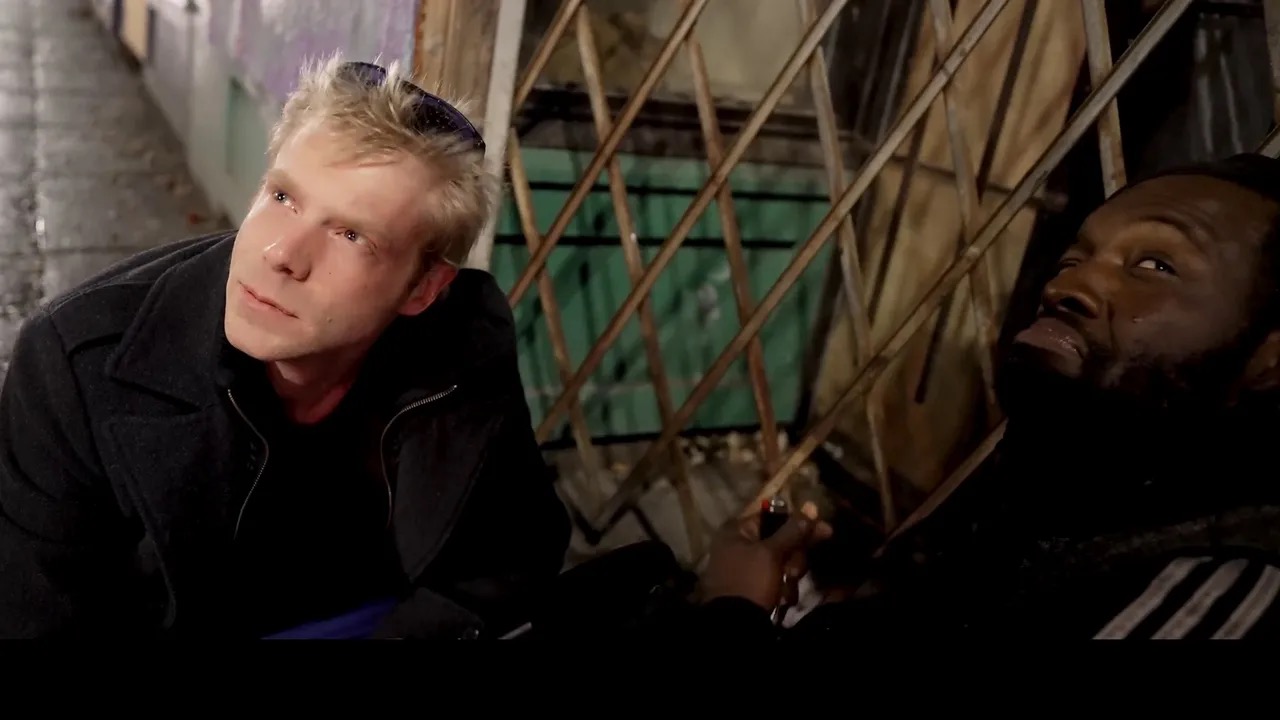
Portland, Oregon – In the shadowy streets of downtown Portland, beneath the glow of streetlights and the sharp chill of November winds, a Portland homeless man who identifies only as “Nameless” sits with interviewer Charles Randolph to share his deeply personal reflections on life. Their conversation, conducted near a building once a church, reveals a tapestry of hardship, survival, and philosophical musings.
Nameless’s journey began in 2021, when he left his life in Georgia to pursue a backpacking lifestyle, seeking a reprieve from the trappings of digital connectivity. “I stopped using computers… I want to live off the grid,” he stated, reflecting a yearning for simplicity amidst the chaos of modern life. His sense of home is intangible, rooted more in a spiritual search for peace than a physical space.
The streets, to Nameless, are paradoxically both sanctuary and battleground. He explained how the former church building, now converted into commercial spaces, provides a rare refuge from the unrelenting winds he describes as having “an intelligence” that cuts through to the soul. Despite the physical suffering, Nameless sees value in his experiences. “The pain teaches me lessons,” he shared, emphasizing his goal to be kinder to himself and others.
A significant portion of the discussion focused on the ever-present specter of drugs. Nameless spoke of heroin’s resurgence, contradicting the prevailing narrative that fentanyl dominates the streets. He expressed a poignant mix of sorrow and resignation over the lives lost to addiction. Yet, his reflections ventured beyond despair, imagining a world where drugs transform into tools of connection and protection, akin to fantastical creatures that safeguard rather than destroy.
Randolph’s questions also delved into broader societal issues, including the alienation and despair that many feel. Nameless offered a bleak view of modern society, likening it to a dystopian herd bound for destruction. “Society’s destitute,” he remarked, attributing much of humanity’s suffering to a loss of communal care and respect for nature.
Their conversation wasn’t without controversy. Nameless expressed relief over the outcome of recent elections, candidly stating his opposition to female leadership, a view he tied to feelings of marginalization as a Black man. While his remarks may spark debate, they reflect the unfiltered reality of his worldview—a mix of deeply personal pain and societal critique.
The dialogue also touched on Portland’s shifting landscape. Nameless referred to the area as “Skid Row,” lamenting its decline and drawing comparisons to Detroit’s economic struggles. The city’s decriminalization of hard drugs in 2021 (Update 2024) and rising crime rates formed the backdrop for his observations, painting a stark picture of urban decay and unmet needs.
As the interview concluded, Nameless revealed his purpose: to act as a poet and spiritual intercessor for lost souls. “That’s what keeps me tethered to this world,” he said, emphasizing the role of art and spirituality in his survival. His gratitude to Randolph for listening and the parting comment, “I like your shoes,” was a poignant reminder of his humanity amidst adversity.
Charles Randolph’s interview is a call to action, urging viewers to confront the realities of homelessness and addiction with empathy and a commitment to change. Nameless’s story is one of resilience, imagination, and a longing for connection in a world that often feels indifferent.
💡 Want more sharp, independent analysis like this? Visit ToSpeakOnline.com and become a member—starting at just 10¢ a day! Your support helps pay our contributors and keeps the platform truly independent.
Follow Us On Your Favorite Platform!