I’ve often picked up a book by Noam Chomsky, read the title, glanced at the back, and walked away, frustrated. That changed with The Myth of American Idealism. I turned to this book because of the modern rhetoric surrounding foreign policy. Lately, I’ve heard outright displays of imperialism—proposals to annex Canada and Greenland, for instance. These events made me question our motivations and intentions as a nation, especially considering the Ukraine war. I’m an American idealist—I want to believe that our motivations and intentions in foreign policy are pure. But after reading this book and reflecting on current affairs, I can see that’s not necessarily the case.
The Ukraine War: Resources Over People: As I read about President Trump’s efforts to bring peace between Ukraine and Russia, a staple “rare earth minerals” remained in the headlines. As we’ve heard, Ukraine possesses valuable rare earth minerals, and Canada does too. During peace negotiation efforts between Ukraine and America, retaining control of these minerals was the U.S.’s primary condition for peace. Sure, there were comments about concern for human life, but the value of those minerals got equal to or more significant attention. It made me wonder: Why does the value of human life seem to depend on economic gain?
In return for U.S. foreign investment, Ukraine wants a guarantee of its safety to maintain its sovereignty. In particular, membership in NATO. For Ukraine, NATO membership would guarantee safety—Russia wouldn’t dare invade again, knowing the U.S., Europe, and other allies would be treaty-bound to defend them. That’s why Putin opposes Ukraine’s NATO bid so fiercely. Ukraine’s concerns are justified; Russia has a history of breaking agreements and proceeding with military action. However, during negotiations, it was striking that the U.S. wouldn’t support Ukraine joining NATO or offer solid safety guarantees. Instead, we got a passive assurance: U.S. personnel in Ukraine would somehow deter Russia. That’s no absolute protection—if Russia invaded again, they could bypass any U.S.-staffed sites. It felt more symbolic than substantive.
Ukraine’s nuclear power resources also hit the headlines. The U.S. depends on foreign countries like Canada for energy, so securing alternative sources is a clear priority, especially with our current trade policies. President Trump even proposed taking control of Ukraine’s nuclear power, again promising only passive protection in return. But I keep returning to the same question: If we care so much about human life, why is its value tied to resources?
This isn’t just a Trump thing, either. Sure, his tendency to make things public brought these discussions to light, but other administrations—regardless of party—have similar conversations behind closed doors. The difference is it wouldn’t be so public.
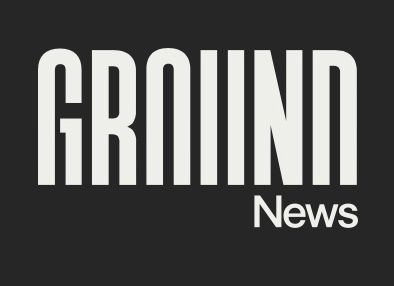
The Sad Truth—and a Hopeful Future: The sad truth is that American foreign policy has long been driven by economic interests—big business contracts wrapped in propaganda about spreading freedom. But we’re spreading opportunity, not for people, but for businesses. Even after reading this book, I remain an American idealist. I hold onto the hope that our foreign policy will one day reflect our true ideals, not just economic gain.
Many of us, like me, think we’re stationed in certain places to protect others, not ourselves. But too often, we’re there to safeguard business investments, not people. So, let’s keep questioning. Let’s challenge the state’s motivations and intentions. Our active engagement in this discourse is crucial for the future of our foreign policy.
If you are interested in these topics, you can purchase a copy of the book here. I am an Amazon associate. Your purchase via. The link helps promote my work at no cost to you. Join the discussion and check out our current reading list here.
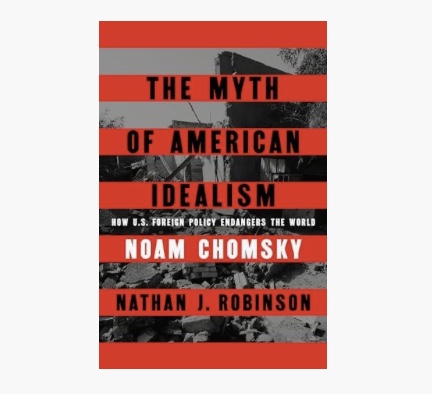
The Myth of American Idealism: How U.S. Foreign Policy Endangers the World
Noam Chompsky, you when this round….
Thank you for your support and let’s continue to MAKE READING GREAT AGAIN!
Follow us! 🌐 ToSpeakOnline.com | 📺 YouTube Channel | 🎙️ Spotify Podcast | ✉️ Newsletters | TikTok | Instagram | Twitter/X | Facebook | All My Links | Partners & Associations
Written by: Charles L Randolph