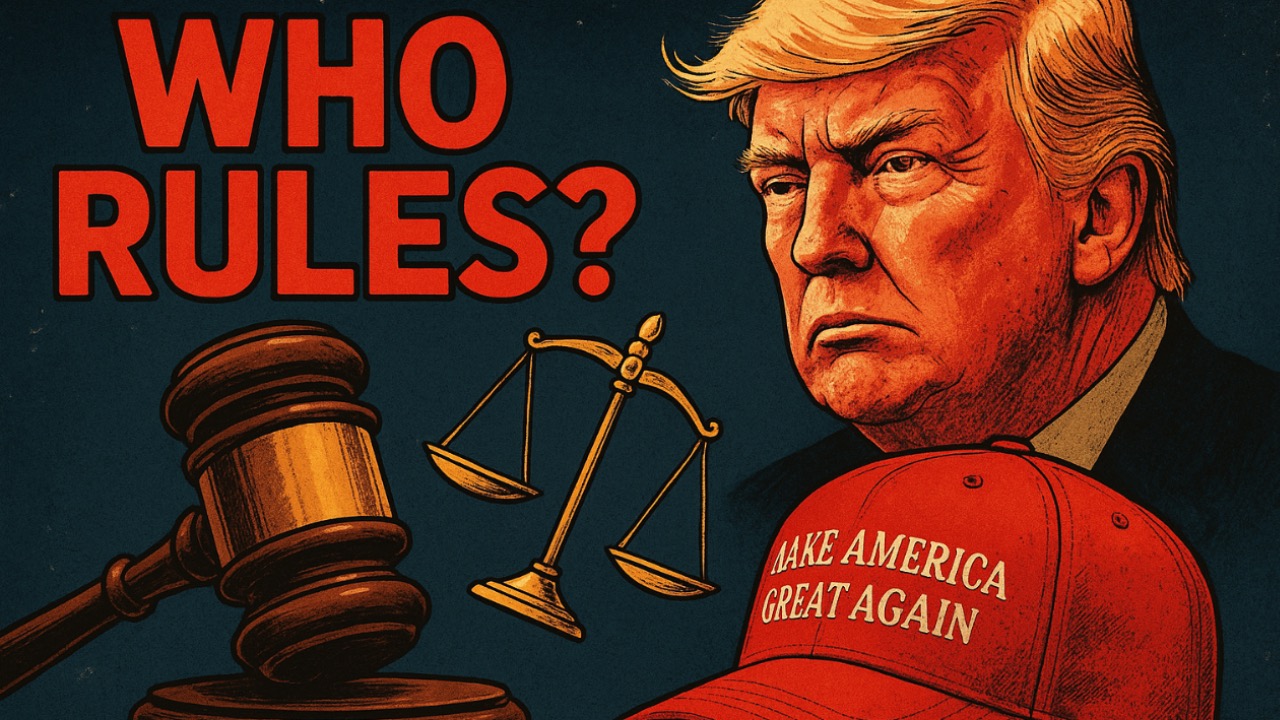
When Donald Trump and his allies label judges as “activist judge,” they are not merely engaging in political theater. They are executing a calculated strategy that exploits the vulnerabilities of America’s fragmented media ecosystem. This tactic has reshaped public perception of the judiciary and exposed critical weaknesses in how media framing, agenda-setting, and disinformation dynamics influence democratic institutions.
Framing the ‘Activist Judge’: Competing Media Narratives
In media studies, framing refers to the way information is presented to audiences, influencing their interpretation. Trump’s narrative frames any legal action against him as politically motivated persecution by “activist judge.” This portrayal is amplified by conservative media outlets, including Fox News and Newsmax, which often present judicial decisions as partisan attacks rather than impartial rulings.
Conversely, mainstream and liberal-leaning media frame Trump’s attacks on the judiciary as dangerous assaults on judicial independence. For instance, The Guardian reported that Trump’s rhetoric poses physical risks for the judiciary and undermines the U.S. judicial system, quoting experts who likened his tactics to those of a mob boss targeting judges.
Agenda-Setting: Trump’s Dominance of the Media Narrative
Agenda-setting theory posits that the media doesn’t tell people what to think, but rather what to think about. Trump’s relentless social media activity ensures that his attacks on judges become headline news, thereby setting the public agenda. Even when media outlets attempt to fact-check or criticize his statements, they inadvertently amplify his message.
This phenomenon presents a dilemma identified by communication scholar Kathleen Hall Jamieson, who notes that covering false or incendiary claims can further entrench them in the public consciousness if not handled carefully.
In an article by chqdaily.com, she stated: “The reason that fake news was called fake news was (because) it’s engaging in identity theft,” Jamieson said. “It’s pretending it’s news by looking like news, and as a result, you might be deceived.”

Inoculation and Confirmation Bias: Fortifying the Base
Trump’s repeated assertions that judges are biased serve as a form of psychological inoculation for his supporters. Inoculation theory suggests that exposing individuals to a weakened form of an argument can build resistance to it. By preemptively labeling judges as corrupt, Trump prepares his base to dismiss any unfavorable rulings as illegitimate. Polls corroborate this effect. Following Trump’s indictment, according to poll from Reuters/Ipsos, 81% of Republicans believed the prosecution was politically motivated.
The Consequences: Undermining Democratic Institutions
The media ecosystem has functioned both as an amplifier and an antidote to Trump’s “activist judge” narrative. While partisan echo chambers have uncritically disseminated his claims, efforts to uphold judicial legitimacy have struggled to reach those most influenced by his rhetoric.
Trump’s communication strategy demonstrates a savvy understanding of modern media dynamics: by making outrageous claims, he ensures coverage (agenda-setting); by consistently framing judges as biased, he shapes public perception (framing); and by repeating these claims, he solidifies his supporters’ beliefs (inoculation effect).
The net effect is a deeply divided information reality. One segment of Americans views judges as impartial guardians of the law, while another sees them as corrupt agents of a political agenda. This division poses a significant threat to the rule of law and the integrity of democratic institutions.
💡 Want more sharp, independent analysis like this? Visit ToSpeakOnline.com and become a member—starting at just 10¢ a day! Your support helps pay our contributors and keeps the platform truly independent.
Follow Us On Your Favorite Platform!