Influencer culture has taken over how we share knowledge, sell products, and shape public opinion. But at what cost?
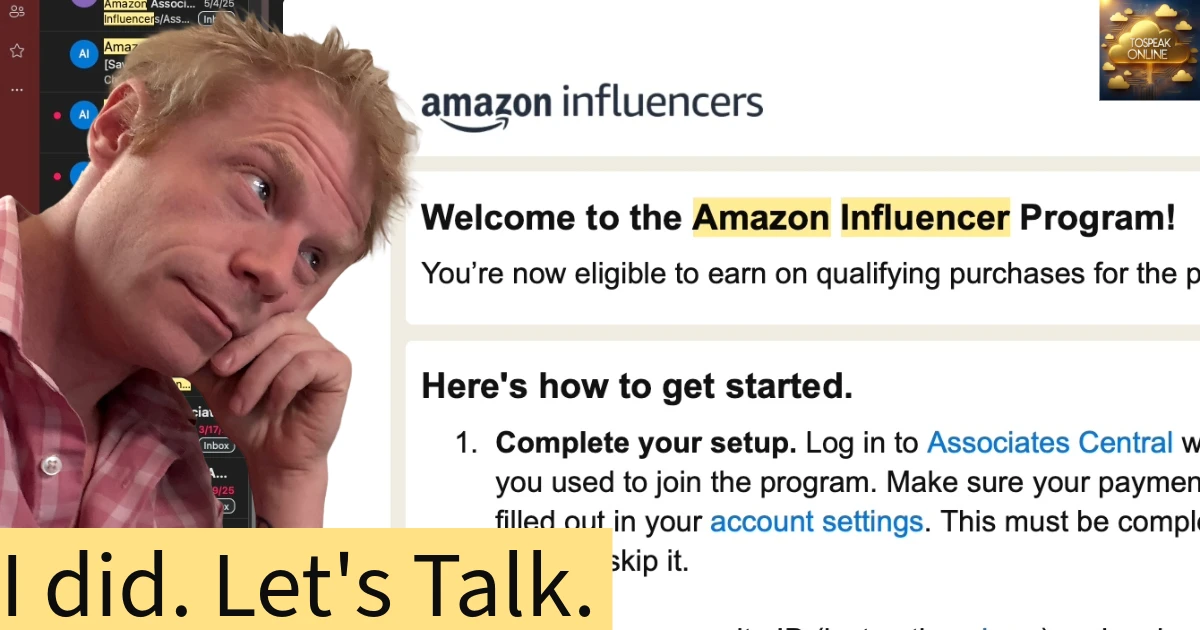
“I just became an Amazon Influencer,” I told my friend.
Her response, with no delay.
“Isn’t that everything you stand against?”
She wasn’t wrong. And yet… here I am.
Let me explain – because this story isn’t just personal. It’s a mirror held up to a culture that increasingly confuses visibility with value.
How Influencer Culture Replaced Credibility with Clout
We’ve devalued the concept of earned authority in America. Education, experience, real-world contributions – these used to matter. Now, your influence isn’t measured not by insight. It’s measured by your follower count.
We’ve replaced accomplishment with attention. In today’s influencer economy, opinion is no longer something you earn, it’s something you accumulate through engagement. Platforms reward performance, not depth. Popularity, not precision and it’s dangerous.
Social media algorithms are designed to elevate what’s shocking, divisive, or emotionally manipulative, not what’s thoughtful or true. That’s how something like the Benadryl overdose challenge became trending on TikTok. That’s how misinformation spreads and why “false news reaches more people than the truth” (Vosoughi, Roy, & Aral, 2018, p. 1146). The system rewards “engagement” not credibility.
Imagine if your feed prioritized truth over traction. If it boosted ideas from people with demonstrated knowledge rather than cleavage, curated trauma, or AI-generated hot takes.
We’re long past the tipping point.
According to Pew Research (2024), 4 in 10 adults under 30 now get their news from influencers! That’s not media literacy. That’s a substitution.
So we must ask: Are we drawn to substance or to something that simply agrees with us?
So Why Did I Become an Amazon Influencer?
Because I believe influence can and should be reclaimed. I joined the Amazon influencer program. But not to shill hair gummies or LED tripods. My storefront is a space for books, ideas, and productive materials that promote critical thinking and analytical philosophy.
Back in high school, I was shaped by thinkers like Richard Dawkins, Sam Harris, Daniel Dennett, Christopher Hitchens, and Lawrence Krauss. While they were often grouped into the New Atheism movement, what drew me wasn’t the dogma it was their thinking and epistemology. They cared about how we know what we know. About evidence. About clarity. About reason.
That movement faded perhaps rightly, under criticism of its perceived religious intolerance. A lesson in itself, that is, you can be right in your reasoning and wrong in your delivery. That distinction matters, especially in a digital landscape where cultural confrontation has been monetized and outrage is a business model.
One of the first books I recommended for my column Readical where we read, review and apply concepts learned within a book was Jesus and John Wayne by Kristin Kobes Du Mez. I wanted to understand why Donald Trump resonated so deeply with certain cultural factions. The book helped me examine the shifting foundations of American evangelicalism and its entanglement with masculinity, fear, and nationalism. It reminded me that part of reclaiming influence is learning how to communicate with those who see the world differently and understanding the systems that shape them.
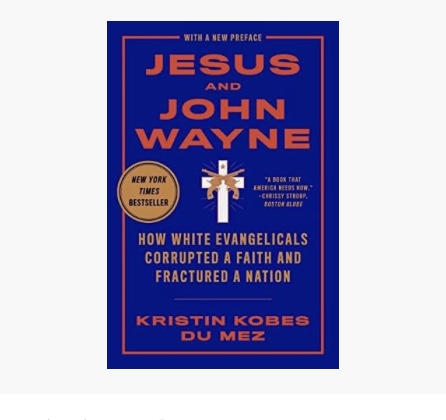
Jesus and John Wayne: How White Evangelicals Corrupted a Faith and Fractured a Nation
(Told you I sold out but for a reason – please keep reading LOL!)
Redefining What It Means to Be an Influencer
This isn’t just philosophical – I have skin in the game.
I have a degree in Communication, with a focus on media, writing and research with academic honors. I’ve completed a five-year apprenticeship program, worked in the trades, overseen the design and construction of process piping systems at Intel, served as a Graduate Teaching Assistant in a university MS program, and built To Speak Online, a platform that fuses journalism, academia, and critical media analysis.
In a previous era, that would’ve been enough to earn credibility. Now, I have to be an “influencer” with a following just to be heard.
Do I have formal degrees in every topic I cover? No, and I don’t expect others to either. I’ve earned the right to speak on them, not through credentials, but through exercise. I want to set an example to others that we should not just have opinions, they should be informed opinions and demonstrate if shared to the public why they deserve to be heard.
And I don’t just say I know things I attempt to demonstrate it. In my column Readical, we take action to read and build an informed worldview through practice not performance. Unpack the ideas that shape modern thought—media systems, epistemology, propaganda—and apply them to real-world events. I believe anyone who wants to influence others should be held to that same standard. That, in my view, is what influence should rest on.
Rethinking Influence
We all carry beliefs like old coats, hanging in the back of our minds, rarely examined. Every now and then, it’s worth stepping into the closet of your thinking, pulling one down, and asking:
Does this still fit? Or is it outdated, misplaced… or just trash?
That’s what I ask of myself. And increasingly, it’s what I ask of influencer culture.
It’s a strange thing to criticize a system from inside it but sometimes, to change a system, you must be part of it.
So yes, I’m an Amazon Influencer. And no, I’m not proud of it. But I am intentional about it.
And maybe, that’s where resistance begins.
💡 Want more sharp, independent analysis like this? Visit ToSpeakOnline.com and become a member—starting at just 10¢ a day! Your support helps pay our contributors and keeps the platform truly independent.
Follow Us On Your Favorite Platform!